The long-awaited end of the First World War brought radical changes to the political and administrative organisation of Slovenian life, as Slovenes were divided among four new states. In Carinthia, too, the new state border broke the centuries-old unity of the region and encouraged new connections. The capitulation of the Austrian army in 1918 did not yet mean the end of the fighting for the people of Carinthia, since the determination of the northern state border was beset by various military and political complications for four years
Already during the First World War, Slovenian territory became one of the Entente’s war aims. Efforts by Slovenian politicians to unite Slovenian territory in a common state were not particularly successful. In Carinthia, where the national composition of the population had changed in the 19th century under the influence of Germanisation, national tensions became even more acute over the question of the state border.
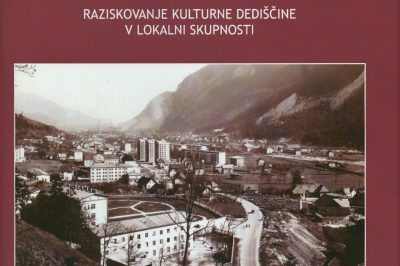
Tensions between Slovenes and Germans, as well as Germanised Slovenes, flared up in Carinthia during the “declaration movement”, a movement in support of the May Declaration, which Dr Anton Korošec read on behalf of the Yugoslav Club in the Austrian House of Deputies in Vienna on 30 May 1917. It called for the political independence of Slovenes, Croats and Serbs within the Austrian monarchy. This demand prompted a large-scale collection of signatures in support of the declaration and, consequently, the self-determination of nations. The declaration was fiercely attacked by Germans, who advocated the indivisibility of Carinthia and Styria, arguing that the two regions were economically interconnected. In individual towns, Slovenes and Germans organised public rallies. The declaration movement spread throughout the Mežica Valley and, in the Drava Valley, from Dravograd to the northernmost Slovenian settlements in the Kozjak Hills, as far as Vuhred and Brezno. According to figures published in the newspaper Mir, 3,020 signatures were collected in the towns of the Mežica Valley in April and May 1918.
The May Declaration was not followed by adequate military preparedness on the part of the Slovenian or Yugoslav army, and therefore, along with the widespread movement, it lost its significance as a watershed event. Sadly, the Slovenian political leadership at the time lacked the resolve and organisation to occupy Carinthia in time. Malgaj’s military operations at the end of 1918 came too late. The Germans gained time, organised themselves and advanced as far as Slovenj Gradec and Radlje in April 1919.
Text by: Dr Karla Oder